The lowly dustpan has a great name in Portuguese: Pá! It requires the exclamation point, I think, since it sounds like a sound effect: Pah! Pow! Pop! Piu!
In an antiques shop we encountered a remarkable dustpan: made of silver, intended to catch the crumbs swept from the table cloth after a meal. A distinctive, civilized solution to a common need. I say bring back table-top dustpan-brush sets! They don’t have to be sterling silver. But they could be decorative, in a better category than the plastic ones sold for use sweeping the floor.
Before I got sidetracked by medieval beds, I had intended to ponder the different kinds of staying in. There’s the staying in because it is so calming and cozy; and the staying in because one is terrified of going out. I suppose that’s a bit of a continuum, with just a more pragmatic motivation at one end and a more fearful anxiety at the other. Nonetheless, staying in is seen as a more comfortable option.
I think there may be indoor and outdoor cultures, too. I ran into a middle aged Canadian woman recently, who cheerfully joined me in remembering how we used to run around in the woods as kids, having long adventures, venturing miles from home.
And yet I know many people — in the US as well as in Brazil — who rarely leave their homes, or only by car for necessary outings like doctor’s appointments and groceries.
The motives and contexts seem as diverse as possible, at least anecdotally. Big house, small house; hot climate, cold climate; rich, poor; safe neighborhood, rough neighborhood; car, no car…
Off to find another illustration, as that’s half the fun:
The other day a few women I was talking to agreed among themselves how happy they would be to just stay in, cozy in their own homes, instead of being obliged to go out to various other places so frequently.
And I thought there’s something to agree with in that, as I too really enjoy staying home, where everything is just as I prefer it, comfortable, cozy, and quiet.
So I thought to find a picture of someone snug in their bed in order to illustrate the idea, which led to a rather surprising discover: in searching medieval art, most depictions of people in bed are rather drama-filled. Besides the expected depictions of adultery, there are many other interesting categories of illustration:
One of the most beautiful is of poor Tobit getting a blinding eye-full of bird poo, which leads to all sorts of interesting adventures (See the Book of Tobit in the Bible for the full story). This one is worth a close look. Such beautiful detail, from the fabrics to the mechanics of the cooking setup, and, well, to the providential bird.
Being killed in bed is not uncommon, as many images depict. Or, as in the following, being awakened to receive the news that other people have been killed:
Of course there is being dead in bed, with scenes of mourners, angels or devils gathered around you. This one is especially spectacular, as it is the death of the Virgin Mary, with all of Heaven gathered around her to carry her up (by tradition she rose bodily into Heaven, rather than just in spirit).
/
If one isn’t dead yet, one might be sick, and pictures of people being attended to while sick are common. Here’s King Louis IX being healed by a piece of the True Cross:
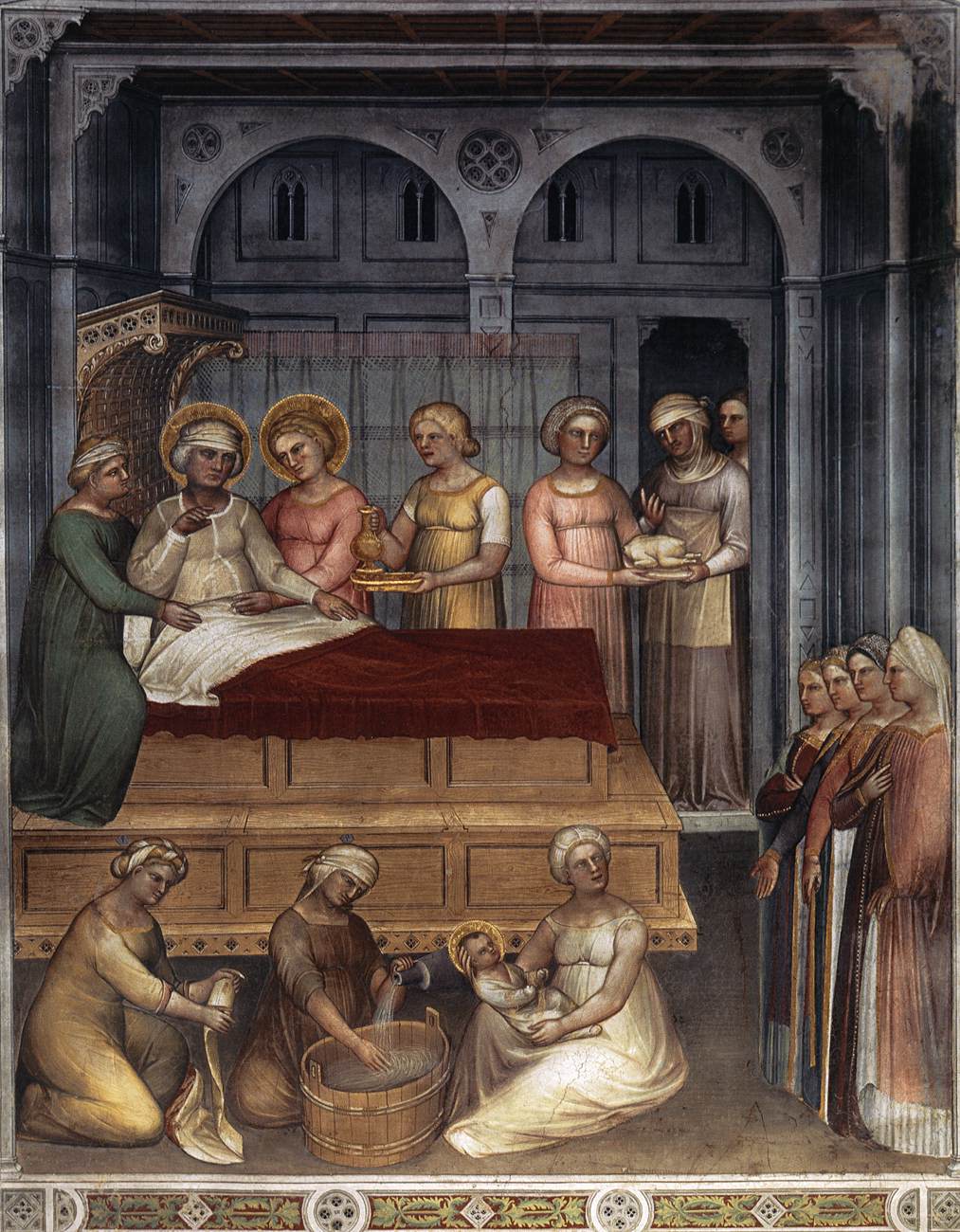
Of course, childbirth is often centered around a bed in art from this period, and in many cases the pictures include adjacent scenes of midwives washing the child, servants bringing food to the tired mother, and family members peeking in from nearby. This is the birth of John the Baptist, in a beautifully detailed architectural setting:
And finally, there is socializing in bed, or at least near the bed. It’s not uncommon for scenes of (usually royal) meetings being held with the bed centrally featured in the scene, even if it is neatly made and not being used. Here are a couple examples:
The other day a friend discovered she was being transferred to another city. Despite the news being unexpected, and the move probably entailing various sorts of complications and adapting to a new schedule and new duties, the second sentence out of her mouth was: “It’s an honor and a privilege.”
What a marvelous approach to the unknown complexities that each day brings…
In this case referring to online reviews, which need to be raked back and forth to remove the clods. We once read a review of a fancy restaurant featuring a fixed price tasting menu: “Really tiny portions and they don’t even let you choose what you want! What an outrage!”
Then there are the complaints about the high prices at shops in airports. Your mother warned you.
It will be interesting to see what happens when most internet users are over 50. Then they will mention that you can’t get to the bathrooms without climbing a long flight of stairs while dodging running waitstaff. Or that the chairs are hard and the menu too small to read.
Then there are the unadventurous who accidentally went to an adventurous restaurant and didn’t much enjoy it.
Or the older couple who didn’t realize modern trends includes a revolutionary throwing away of the former symbols of fancy, such as white table cloths and candles and waiter’s outfits, so although the place you chose for your 50th anniversary has a Michelin star it looks like a local burger joint.
Or the gourmet who ended up at yet another greasy spoon, having an overly greasy sandwich and lukewarm coffee served by an awkward youth who is frightened by any questions about the menu.
We were once mildly entertained by such a youth who could not for the life of him remember our drink order (sparkling water) for long enough to reach the bar. He returned three times to double check. Others in the same pickle just bring sparkling and still to cover all their options. Do you cover options or only bases?
One of the joys of being left alone is not having to do elaborate meals. Social meals taste better, but are lengthy affairs, and only worth it for really good food and really good company. Or at least one or the other.
Toast and cheese with an apple and a cup of tea sorts the hungries in much less time on any other occasion.
I’ve stopped eating lettuce, as it seems to be off-season and spends most of its time wilting and taking up space, either on the plate or in the fridge, without offering much to chew on. Radishes and carrots are more interesting.
Years ago I had horses, and spent some time learning to ride, drive and handle the first one, and then a second one, and finally a third. It was the culmination of a lifelong fascination with horses, and an activity to which I devoted myself with unfettered enthusiasm. The poor horses had to work every morning, no matter the weather, as I arrived at the barn at some early hour just past daybreak and made sure each one had ‘training’ for an hour each. Over the course of the decade that I devoted to this activity we tried hunter pacing, fox hunting, competitive carriage driving, pleasure driving, trail riding, mounted games, and dressage. The last and youngest horse got sent off to learn to jump and (with a different trainer) to work cattle, just to make sure he was well rounded. And during this whole period I also co-wrote a couple of books with a horse trainer and ran a video business which involved spending hours and hours at clinics recording people’s sessions with respected trainers from far away.
Since moving abroad and living a horse-less urban life I spend hours a week watching other people train horses on YouTube.
And this has led me to a few conclusions, none of which are different from earlier conclusions reached back in the day.
The main conclusion is that most higher animals are very aware of visual communication, more even than aural. And humans seem to have a particular quirk in which our minds run on Track A while our bodies carry on on Track B, C or D. Animals tend to do what they are thinking, with some rare exceptions of duplicity in some of the more intelligent ones, who can sneak, hide things, pretend, and so on.
But I can’t tell you the number of times I’ve seen people dealing with horses who have some of the following comportments, and don’t understand why their horse is hard to handle:
Agitated unconscious body language: example being a woman who I spoke to once who was standing at the side of her new pony – supposedly a nervous one, and hard to catch — who moved her feet and flailed her arms randomly while rapidly speaking about something or other, sometimes even hitting the pony unintentionally while gesturing. The pony stood as best he could, flinching when her hands came close to his head or neck.
One of the most outstanding features of the trainers I most admire is a profound calm. Their calm, confident, silent presence alone is already interesting to the horse, and provides a ‘refuge’ for the horse to pay attention to. In a few minutes the trainer can often halter the horse, lead the horse, mount and ride, and so on with none of the expressions of anxiety that the horse exhibits when handled by the owner.
One of the great demonstrators of this technique is Warwick Schiller. Another is Michael Peace. In both cases they have such a present awareness that they do not need to use large cues to clarify what they want. The horse can respond to very small cues because there is no ‘static’ obscuring the message. The presence of the trainer is like a break in the clouds, with everything suddenly revealed.
Other good trainers are slightly less quiet, and use louder cues, but use them with great consistency. The clarity of consistency in this case overcomes the problems the owner was having. In these cases the owner is often tentative, which the horse interprets as their companion being nervous and fearful, which makes the horse worried and unconfident. The arrival of a trainer who is confident and uncomplicated, even if a bit rougher than necessary, clarifies everything: yes means yes, no means no, and I always know if the human is saying yes or no. The owner is then retrained to say ‘yes’ and ‘no’ instead of ‘well, I’m not sure, maybe, could we sort of should we, oh dear.’ And the horse, relieved of the morass of confusion, relaxes and starts to engage instead of wishing he could be anywhere else.
And then there are the range of horses who are perfectly good at doing this or that, but aren’t really trained so much as they have memorized certain tasks and enjoy human company. If anything unexpected happens they are a bit lost. But for many horses this is enough for a routine life of giving riding lessons or going to shows or just being a pet.
Living in a foreign country where understanding is always impeded a bit, I am a big fan of clarity. And I notice how relaxing it is to spend time with someone who is present and aware, where one can exchange some longer thoughts or work on a task together without the noise of agitated movement, agitated thoughts, or running hither and yon. One can find that calm in God’s presence, but now and then one runs into a fellow person who radiates that same calm, and it’s a real delight to share in it. Always grateful when that happens.
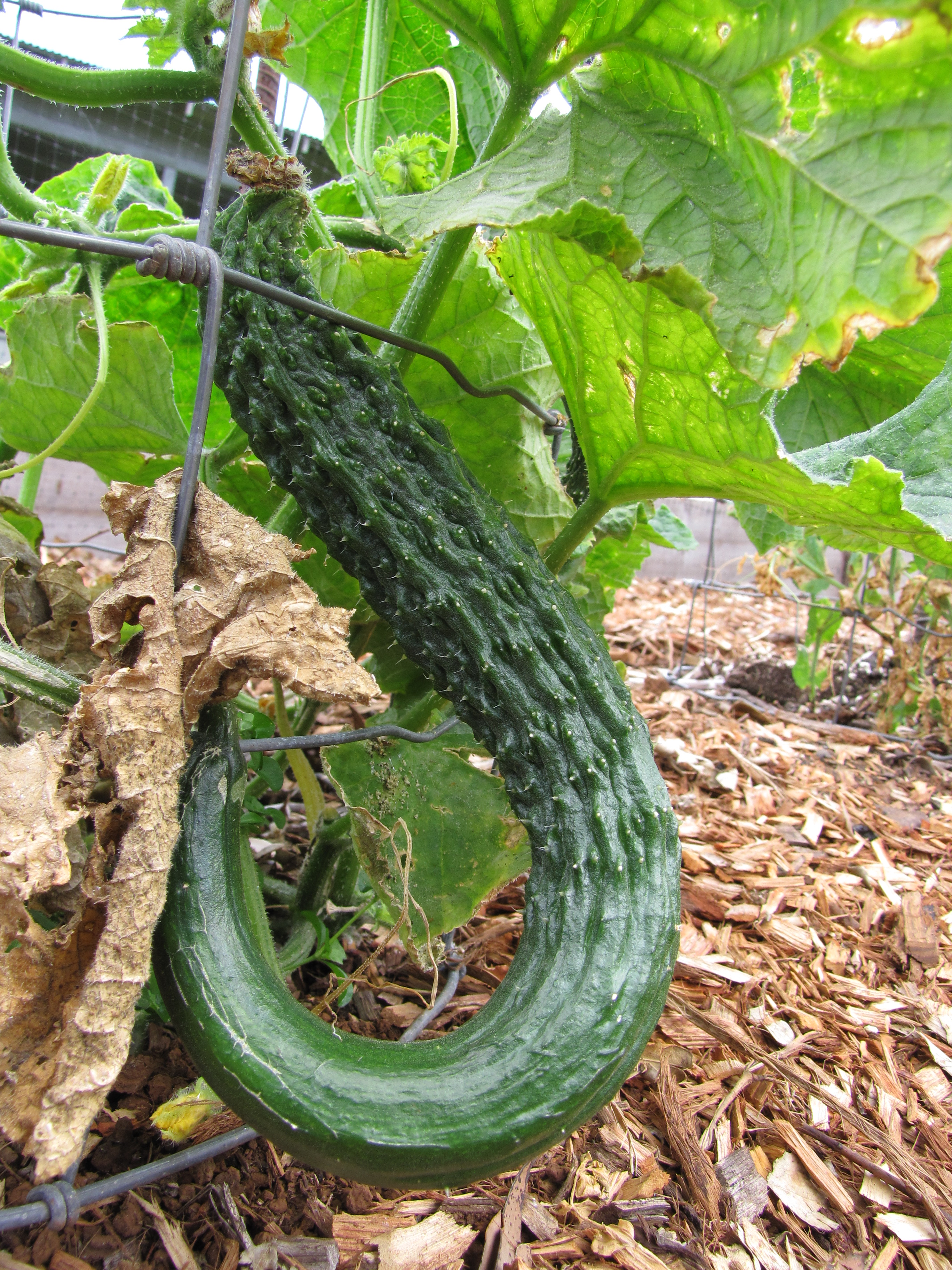
The melon of Saint Caetano is a startling thing. (Caetano is oddly spelled Cajetan in English, presumably with the j pronounced like a y, but I like the Portuguese spelling better!) It is a lovely dark green, and the deeply wrinkled skin accentuates its glossy sheen.
It is experientially in the category of the jiló, a little green eggplant that is remarkably bitter, but remarkably popular as a food despite the taste.
This little melon, mysteriously named for a saint who founded a bank for the poor, is startlingly bitter, but in a fun way. The first bite is shocking, but if you keep eating it the sensation is no longer shocking, until you eat something else, which will taste unaccountably sweet in contrast!
Yesterday we ate one sliced in little rounds and fried in butter, to much acclaim. Today we ate the other in a salad with brother cucumber and some tomatoes keeping the bitter melon company. (It is called Bitter Melon in English, but that is rather literal.)
In any case, natural medicine sources and the medical traditions of some Asian countries consider it good for what ails you. Western medical sites vigorously deny any use whatsoever. So it’s probably good for you.
It made me think about the wonders of the whole melon-cucumber family, though. Has there ever been such an array of delicious, refreshing fruits, so perfectly suited to being eaten on hot days?
Below, some lovely examples, and these are just showing the rinds. Some other time I’ll round up pictures of the insides:
My husband pointed out the other day that I’ve now lived in Rio de Janeiro for longer than I’ve lived in any other town in my life. Thirteen years! Eleven of them in the same apartment. The first two years we didn’t realize we were staying, so we just rented some temporary places notable mostly for various weirdnesses. But not enough time has passed to detail that!
Nevertheless, this came to mind the other morning when I dreamed I was visiting a house in the town I lived in for a good part of my childhood (but only 10 years!) — Yellow Springs, Ohio. I can’t recall a dream in which I was in my college hometown (Bloomington, Indiana) or in Manhattan or Hoboken or, for that matter, Madrid or Chicago or Wanfried-an-der-Lahn, or dozens of other places I’ve visited over the years. Any time I dream vividly of a recognizable place, it’s either Yellow Springs or Sharon, Connecticut.
So here I was, not for the first time, dreaming that I was visiting the old house on Hyde Road where a childhood friend had lived. In dreams set in Yellow Springs the most common locations are Hyde Road or the Glen. I suspect Hyde Road was particularly memorable because it had, in the 1970s, many horses pastured along the roadside, and I would ride my bike down there as often as I could just to see the horses.
My friend’s old house on that road was striking for various reasons. Most other people’s houses were interesting, if only because at the age of 8 or 10 I was now visiting other kids in their homes more often, and for the first time really getting to know the details of how other families lived. One had the coolest squishy linoleum in the hallway, which would hold the imprint of your fingernail if you pressed it. (An activity forbidden as soon as it was discovered by the mother!) Another had a tree house and a strange structure called a carport. It was the only house with a carport I had ever seen; the rest had garages. And this old house on Hyde Road had a bunch of strange features that I remember vividly to this day. One was an enormous brindled dog that I mistook for a tiger on my first visit. Another was a little ‘house’ down from the back door where milk and butter had once been stored in the cold waters of a spring that flowed there. And most fascinating was a secret room, hidden below a large trapdoor in the living room floor, which was in turn hidden by an oriental rug (in my memory, at least). I was told it had been used to shelter people escaping slavery, since the town had been founded by Quakers, who were active in opposing slavery and helping those escaping across the Ohio River to freedom in the North.
So here I was again, as an adult in this dream, going down this same road, and seeing that there was a house-tour event going on. So I wandered up to the house and asked if I could take part in the tour. I no longer recall what happened after that. It was a visually vivid dream, but not otherwise very interesting.
When dreams are set in Sharon, CT the landscape tends to be the main feature – usually I am traversing the neighboring farm fields for some urgent reason or another; or I’m addressing problems in the gully or wooded hillside beside the little cottage we once lived in; these problems usually require traversing the neighboring fields to get the help of the neighbors. I don’t recall anything particularly memorable at the moment. It’s again the visual impact, the clarity of memory of those landscapes, that sticks in my head the most.
Both places had horses in common.
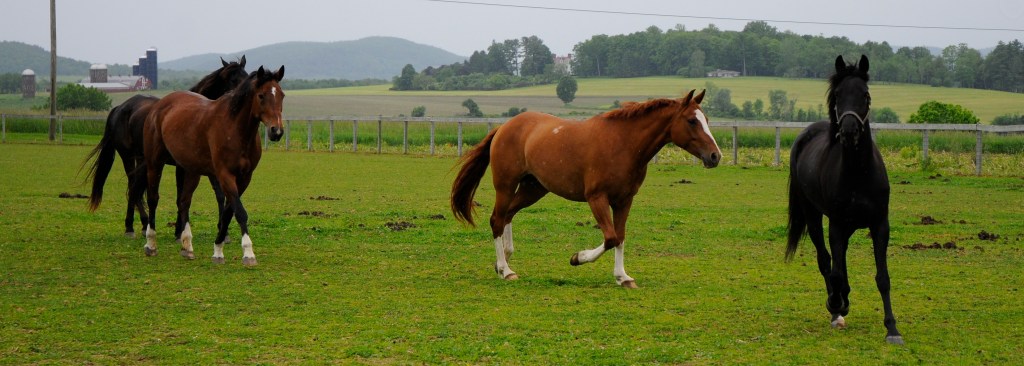
I don’t have any photos of Yellow Springs, but one can find it on google. Of the landscapes around Sharon. My favorite sort: rolling farmland.
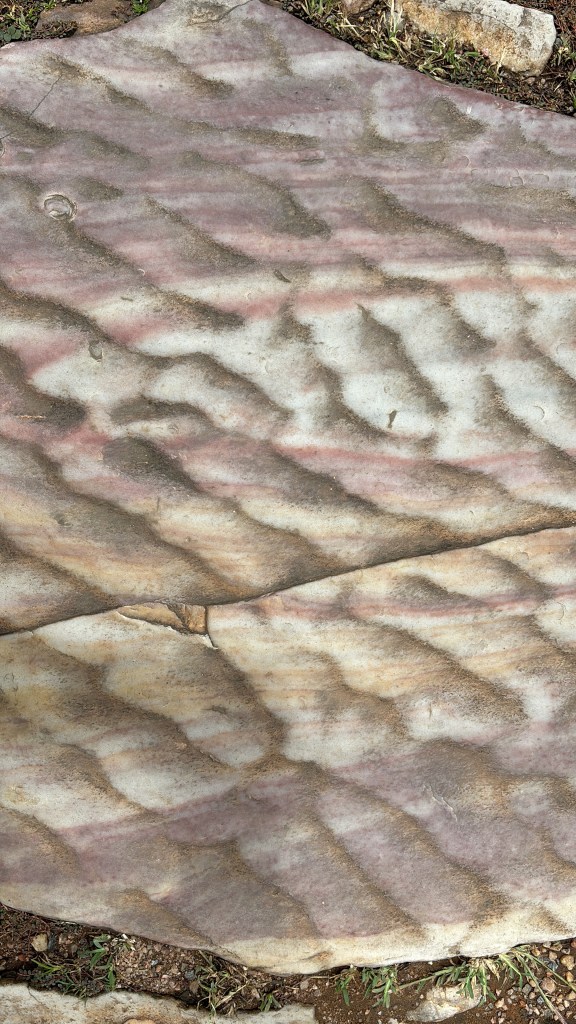
The old roads in some cities in Minas Gerais (a state in Brazil) are paved with soapstone (per Wikipedia), which perhaps explains these beautifully colored blocks of stone I saw the other day in the city formerly known as São José del Rei (more recently renamed for a guy named Tiradentes).











 Joys and sorrows in praise of God